BISP Support Should Be Increased
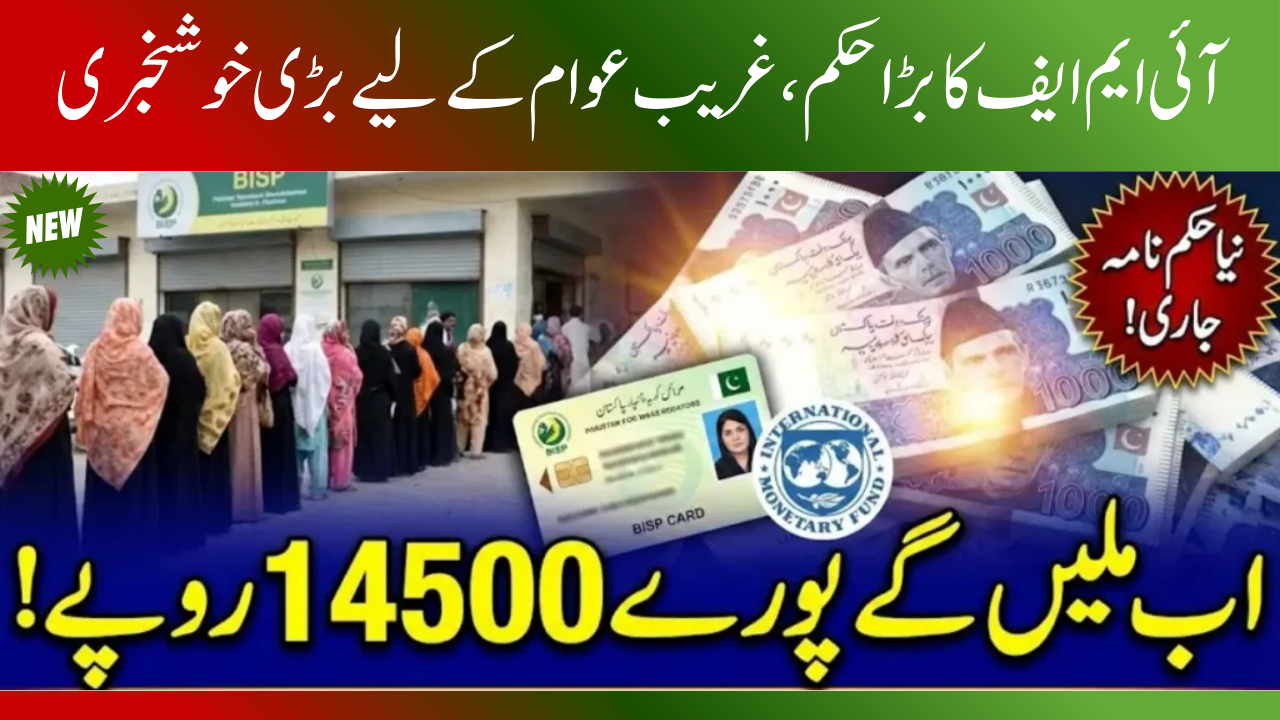
The International Monetary Fund (IMF) has called on the Pakistani government to increase the cash assistance under the Benazir Income Support Program (BISP) from Rs 13,500 to Rs 14,500 by 2026. This proposed increase aims to support low-income families in preserving their purchasing power amid inflation and economic difficulties. Observations from BISP centres across Pakistan highlight the struggles faced by women waiting in long lines, often faced with administrative delays and a lack of sufficient funds. Raising the cash assistance is expected to significantly benefit these families, providing them with the means to meet essential needs such as food, healthcare, and education, thereby enhancing Pakistan’s social safety net and improving the living standards for millions.
You can read more: Easypaisa and JazzCash are already present on Wallet SIM Full Guide 2026
Important Points:
• Current cash support is Rs 13,500 per family.
• Proposed cash support is Rs 14,500 starting in 2026.
• The initiative focuses on low-income households nationwide.
The present state of BISP payments
The Benazir Income Support Program (BISP) serves as a critical component of Pakistan’s social protection framework, offering vital financial aid to millions, predominantly to women who serve as primary carers. The latest report indicates a total expenditure of Rs 463 million for the programme, with plans to expand coverage to approximately 10.2 million families by the end of 2026. However, challenges persist, as only 200,000 families have received assistance in certain regions, leaving many eligible households without adequate support. Inefficiencies such as overcrowded offices, lengthy wait times, and technological delays hinder timely access to funds. The proposed augmentation of cash assistance and broader coverage aims to enhance direct benefits for more families, enabling them to meet essential living costs.
IMF Ideas for 2026
• The IMF has made recommendations to enhance the BISP’s effectiveness in reducing poverty.
• Emphasis on cash assistance covering at least 15% of low-income families’ consumption needs for significant impact.
• Suggested adjustments to payments to account for inflation, safeguarding families from price increases of essentials.
• Call for systematic expansion of BISP coverage to benefit more qualifying households in both rural and urban areas.
• Focus on both the quantity and quality of support to ensure increased funding leads to tangible improvements for poor families.
Intended Extension of Coverage
• The IMF recommends expanding coverage of the BISP programme.
• Current impact is around 200,000 families, projected to exceed one million by the end of 2026.
• BISP aims for nationwide coverage by 2027, reaching almost every deserving family in Pakistan.
• Observations from rural districts show that BISP payments assist families in purchasing necessities, managing health emergencies, and investing in education.
• Expansion will alleviate poverty and stimulate local economies through increased spending in nearby markets.
| Aspect | Current Status | Planned Update |
|---|---|---|
| Cash Support Amount | Rs 13,500 | Rs 14,500 |
| Implementation Year | 2025 | 2026 |
| Target Families | 200,000 | 1,020,000+ |
| Key Focus | Basic financial aid | Inflation-adjusted support & wider coverage |
Advantages of Extending Coverage:
• Greater financial stability for low-income families
• Reduction in rural and urban poverty
• Increased economic activity in local communities
• Strengthened social safety network across the country
Effects on Families with Low Incomes
The increase in Benazir Income Support Programme (BISP) payments aims to enhance the living conditions of low-income households in Pakistan. Currently, the payment of Rs 13,500 is insufficient for families to manage monthly expenses, particularly amid rising inflation. Raising the payment to Rs 14,500 will enable families to better allocate their budgets for essential needs, including groceries, electricity bills, school fees, and healthcare costs.
Direct benefits consist of:
• Improved access to nutritious food and basic household necessities.
• Better access to healthcare and essential medicines.
Forecast for BISP Payments and Coverage
• In 2025, the BISP will cover 200,000 families with cash support of Rs 13,500.
• By 2026, coverage will expand to 1,020,000 families, with support increasing to Rs 14,500 under IMF guidance.
• In 2027, BISP aims for nationwide coverage, providing over Rs 14,500 in cash support, adjusted for inflation.
• The programme is evolving to enhance financial assistance for a growing number of families, targeting full implementation across Pakistan by 2027.
Government and IMF Cooperation
The initiative’s success relies on effective collaboration between the Pakistani government and the IMF, with monitoring and evaluation mechanisms ensuring efficient and transparent fund distribution. Digital payment systems, biometric verification, and regular audits are introduced to minimise delays and fraud, enhancing reliability for beneficiaries. This partnership aims to support vulnerable populations and align Pakistan’s social protection system with international standards, positioning BISP as a potential model for poverty alleviation and financial inclusion in South Asia.
You can read more: BISP Phase 2 Payments Start
Conclusion
The proposed increase in BISP cash assistance to Rs 14,500, along with the expansion to over one million families by 2026, aims to provide economic relief to Pakistan’s poorest communities. Guided by IMF recommendations, this initiative will enhance access to food, healthcare, and education for low-income families, empower women, and support diverse communities. With effective implementation, BISP is positioned to play a crucial role in combating poverty and economic inequality in Pakistan.
FAQs
1. For what reason is the IMF suggesting that BISP payments be increased?
In order to safeguard low-income households from rising inflation and guarantee that financial assistance covers a significant percentage of household consumption requirements, particularly for food, healthcare, and education, the IMF has advocated raising BISP payments.
2. When will the BISP payment rise to Rs 14,500 from Rs 13,500?
Current plans call for the higher payout of Rs 14,500 to be implemented beginning in 2026, subject to budgetary conditions and government approval.
3. Who stands to gain the most from the enhanced BISP assistance?
Pakistan’s low-income households, especially those led by women, would gain the most from the hike, as it will help with basic living expenses and enhance overall financial stability.