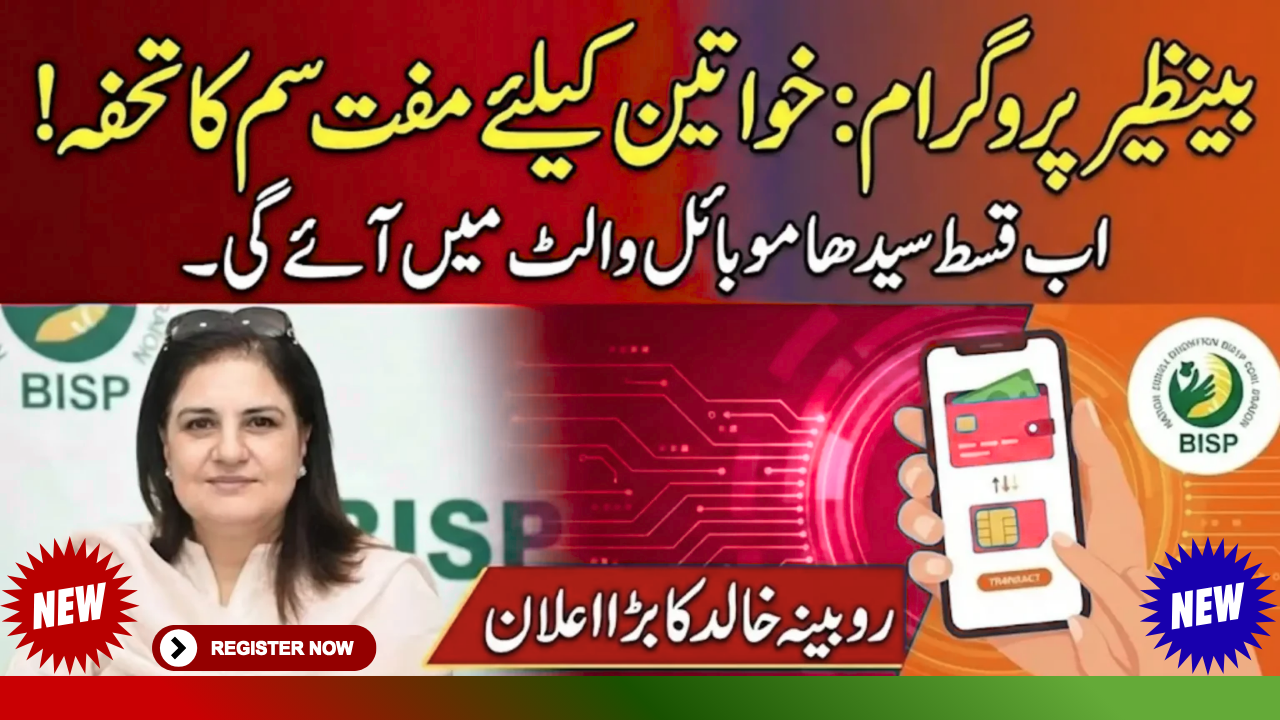
Rubina Khalid Visits the BISP Centre in Pakistan
Senator Rubina Khalid, Chairperson of the Benazir Income Support Program, visited the Dynamic Registry Center in Karachi to assess reforms enhancing service delivery for women. Her inspection prioritised tangible outcomes, involving direct engagement with staff and beneficiaries to gather insights on their experiences.
You can read more: After a new analysis of poverty scores, BISP reopens cards for filers everywhere
This visit highlights BISP’s focus on digital transformation and women’s financial inclusion, ensuring that low-income women in Pakistan can access their financial rights confidently in a technology-based welfare system without relying on intermediaries.
The Chairperson’s Visit Objective
Senator Rubina Khalid visited to assess the implementation of new initiatives, specifically at the Dynamic Registry Center, organising firsthand observation over reports. Her engagement with beneficiaries aimed to foster trust between BISP and the women served. She also addressed misconceptions about free services and digital payments, alleviating fears among many Pakistani women about potential hidden charges.
Review of on-site service quality:
• Direct interaction with women beneficiaries.
• Monitoring of staff performance and training.
An overview of the Gizri Dynamic Registry Centre
• The Civil Lines Gizri Dynamic Registry Center is crucial for BISP operations in Karachi.
• It provides registration updates, verification processes, and beneficiary guidance in a centralised location.
• The centre was busy during a recent visit, with women engaged in educational sessions and receiving assistance from staff.
• It is essential in preparing beneficiaries for a transition to digital systems.
• The centre integrates registration services with awareness programmes, serving as a comprehensive support point for deserving families.
Registration and data correction services:
• Biometric verification support
• On-site guidance for beneficiaries
• Training sessions for digital awareness
Beneficiaries of Free SIM Distribution for Women
A major highlight of the visit was the review of free SIM distribution for women enrolled in BISP, intended for direct access to information and financial benefits. Senator Rubina Khalid emphasised that these SIMs are entirely free, prohibiting any charges. She described them as gateways to future financial services and advised women to consider them valuable personal assets.
SIMs are issued at no cost:
• There are no registration or activation charges.
• Each SIM is linked only to the beneficiary.
• Provides direct access to BISP-related services.
The Center’s Financial and Digital Education
• Women participated in digital and financial education sessions aimed at enhancing their skills in using mobile phones and managing digital payments.
• The sessions focused on practical, easy-to-understand training methods geared towards everyday usage rather than technical jargon.
• This initiative marks a significant opportunity for many women experiencing structured digital learning for the first time.
• Addressing limited digital literacy among low-income women in Pakistan is a key objective of these training sessions.
| Aspect | Details |
|---|---|
| Location | The Dynamic Registry Centre, Karachi |
| Purpose | Review reforms, service quality, and digital initiatives |
| Key Focus | Women’s financial inclusion & digital access |
| Major Initiative | Free SIMs and transition to digital wallets |
• Basic mobile phone handling
• Understanding digital transactions
• Learning safe practices for mobile use
Women’s rights, ownership, and safety
• Senator Rubina Khalid stressed the importance of women safeguarding their SIM cards and mobile phones.
• Future benefits will be transferred via digital wallets associated with these SIMs, ensuring that the funds are legally owned by the women.
• The message highlights the necessity for women in low-income households to have control over financial resources.
• Key points include:
– Keeping SIMs and phones secure.
– Not sharing personal information.
– Reporting loss or misuse immediately.
Transition to Digital Wallet-Based Payments
• BISP is moving from traditional payment methods to digital wallet-based transfers.
• The transition aims to enhance speed, transparency, and tracking of payments.
• The Chairperson indicated this change will cut delays and reduce the role of intermediaries.
• Digital wallets will enable women to receive full funds directly, without deductions.
• Benefits include faster payment processing, reduced fraud risk, and increased transparency in transactions.
ATM Access Plan and Biometric Verification
• BISP plans to enable women to withdraw payments from any bank ATM after biometric verification.
• The initiative aims to enhance convenience and dignity for beneficiaries, particularly in urban and semi-urban regions.
• Implementation will eliminate reliance on specific payment points, facilitating easier access to funds.
• Key features include:
– Biometric Verification: Secure identity confirmation
– ATM Withdrawal: Access from any bank ATM
– Beneficiary Control: Direct handling of funds
Long-Term Effects on the Financial Inclusion of Women
The initiatives from the visit showcase BISP’s aim to empower women via financial inclusion through free SIMs, digital wallets, and education, fostering long-term independence for women in Pakistan. These changes could decrease exploitation, boost confidence, and enhance trust in government welfare. Nationwide implementation may greatly benefit millions of women dependent on BISP support.
You can read more: BISP Rs 13,500 Assistance Check using CNIC’s 8171 Web Portal 2026
Conclusion
The visit by Senator Rubina Khalid to the Gizri Dynamic Registry Centre demonstrates BISP’s steadfast dedication to modernising the provision of assistance and empowering women financially. BISP is assisting women in taking direct management of their financial support through the introduction of wallet-based payments, digital literacy training, and free SIM distribution. These changes improve low-income women’s confidence, security, and dignity while also lessening their reliance on middlemen. These programmes have the potential to significantly improve women’s financial inclusion in Pakistan if they are successfully implemented statewide.
FAQs
1. Do female recipients actually receive free BISP SIM cards?
Indeed. The SIM cards offered by BISP are totally free. Issuance, registration, and activation are all free.
2. Why is BISP switching to payments via digital wallets?
Digital wallets guarantee quicker payments, cut down on fraud, eliminate intermediaries, and enable women to get all of their financial support immediately and openly.
3. How can beneficiaries ensure the security of their payments?
Women should protect their cell phones and SIM cards, refrain from disclosing biometric or personal information, and report any loss or abuse right away.