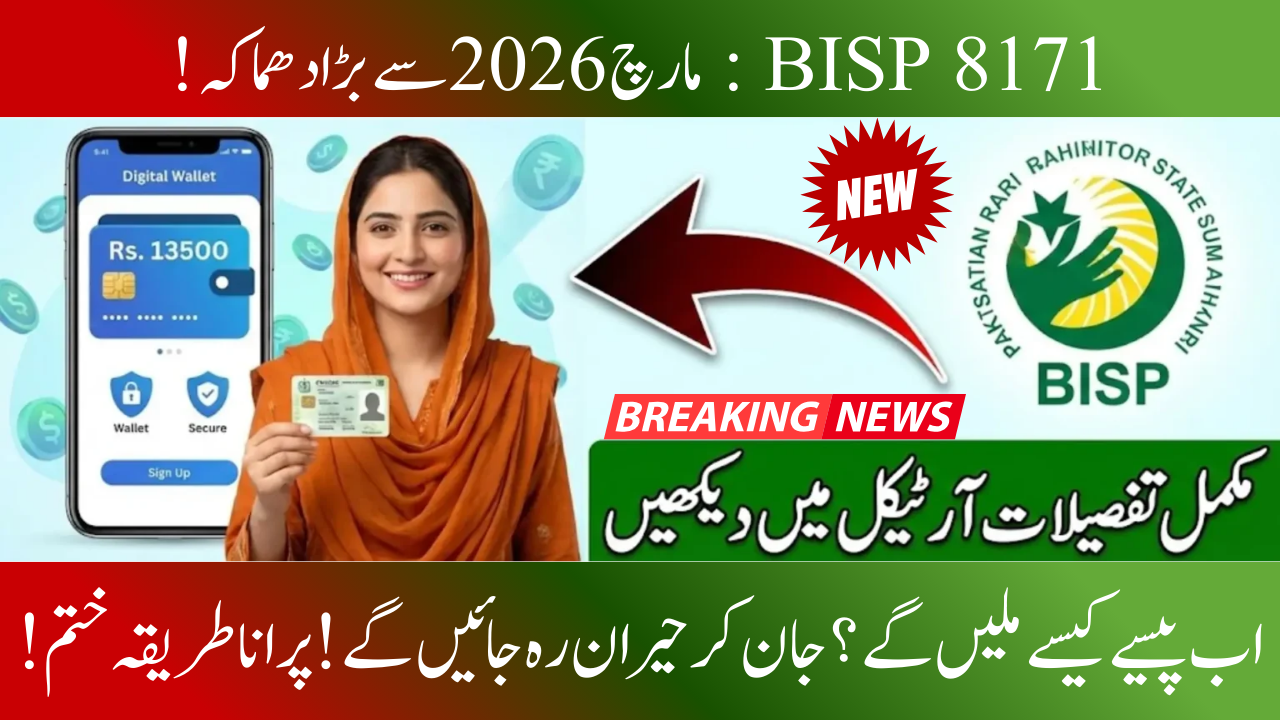
Start Digital Wallet Payments with BISP 8171
The Benazir Income Support Programme (BISP) has announced a landmark reform under the BISP 8171 initiative that will significantly transform the delivery of financial assistance across Pakistan. Starting from March 2026, beneficiaries will receive their quarterly payments through digital wallets instead of traditional cash-based methods. This transition marks a major step toward transparency, efficiency, and financial inclusion in the country’s largest social welfare program.
The digital wallet system is designed to support nearly 10 million low-income families, with a strong emphasis on empowering women enrolled under the Benazir Kafalat Program. By transferring funds directly into personal digital wallets, BISP aims to eliminate middlemen, reduce complaints, and ensure that financial assistance reaches deserving households securely and on time.
You can read more: BISP Wallet SIM 8171 Login & Verification
Nationwide Launch from March 2026
According to official announcements, the digital wallet payment system will be rolled out nationwide from March 2026. This reform replaces manual cash distribution methods that often resulted in delays, unauthorised deductions, and access issues for beneficiaries, particularly women in remote areas.
Under the new system, quarterly payments will be deposited directly into digital wallets linked to beneficiaries’ CNICs and registered mobile numbers. This approach ensures that funds are delivered transparently and can be accessed without reliance on agents or payment centres.
Transition to the 8171 Digital Wallet System
The BISP 8171 digital wallet system enables direct transfers, significantly reducing operational inefficiencies. Each beneficiary’s wallet will be securely connected to their identity and mobile number, allowing real-time payment notifications and better control over funds.
To facilitate this transition, BISP has supported the creation of millions of digital accounts. For beneficiaries who do not own mobile phones, SIM cards are being issued in their own names to ensure uninterrupted access to payments and official alerts. This step is especially important for women who previously depended on shared or inactive numbers.
How Beneficiaries Will Use Digital Wallets
The digital wallets allow beneficiaries to manage their funds conveniently and safely. Users can check their balance, receive SMS notifications for every transaction, and withdraw cash from authorised agents or ATMs whenever needed.
| Feature | Details |
|---|---|
| Program Start | March 2026 |
| Payment Method | Digital Wallet (Cashless Transfer) |
| Beneficiaries | Low-income families, mainly women |
| Quarterly Amount | Rs. 13,500 |
| Withdrawal Options | Authorized agents and ATMs |
Beyond immediate access to payments, this system introduces beneficiaries to basic digital financial tools. Over time, exposure to digital transactions can help households develop better financial awareness and potentially access future services such as savings accounts and mobile banking solutions.
Official Confirmation and Government Support
The Federal Minister for Poverty Alleviation confirmed before the National Assembly that all BISP 8171 payments will fully transition to digital wallets by March 2026. This announcement directly addressed long-standing concerns about delayed payments and unauthorised deductions during cash disbursement.
Women under the Benazir Kafalat Program are expected to benefit the most, as payments will now be transferred directly to their personal wallets. This reform strengthens accountability and builds trust between beneficiaries and government institutions.
Improving Data Accuracy and Preventing Misuse
Accurate data management is critical for a welfare programme of this scale. BISP has strengthened its verification process through updated National Socio-Economic Registry (NSER) records and cross-checking data with Pakistan Bait-ul-Mal.
As a result, thousands of ineligible records have already been removed, ensuring that assistance reaches only deserving households. Continuous digital monitoring and verification tools are expected to further reduce fraud, duplication, and misuse of public funds.
Budget Allocation and Financial Planning
- For the fiscal cycle supporting this reform, the government has allocated Rs. The Benazir Income Support Program received 716 million.
- This budget covers cash transfers, digital infrastructure, administrative costs, and system upgrades required for nationwide implementation.
- Officials have clarified that while BISP does not directly rely on foreign reserves, the allocated budget is sufficient to maintain uninterrupted payments.
- Digital disbursement is expected to lower administrative costs and improve long-term financial sustainability.
Eligibility for the Benazir Kafalat Program
- The Benazir Kafalat Program’s eligibility requirements are stringent in order to guarantee that the poorest households receive assistance. Women are prioritised as primary beneficiaries due to their central role in managing household needs.
- Families above the poverty threshold, government employees, and property owners are excluded from the scheme.
Documents Required for Enrollment
Proper documentation is essential for smooth enrolment and uninterrupted payments. CNIC verification is mandatory, along with a registered mobile number for wallet access.
Additional documents such as NSER or Family Registration Certificates may be required for household verification. Special cases, including widows, divorced women, and persons with disabilities, must submit relevant certificates to confirm eligibility.
Free SIM Cards for Women Beneficiaries
To further support digital payments, BISP is distributing free SIM cards to women beneficiaries, particularly in Sindh. These SIMs are registered directly against CNICs, ensuring secure communication and reliable delivery of payment alerts. This initiative addresses issues caused by shared or inactive numbers and allows women to independently receive official updates and transaction notifications.
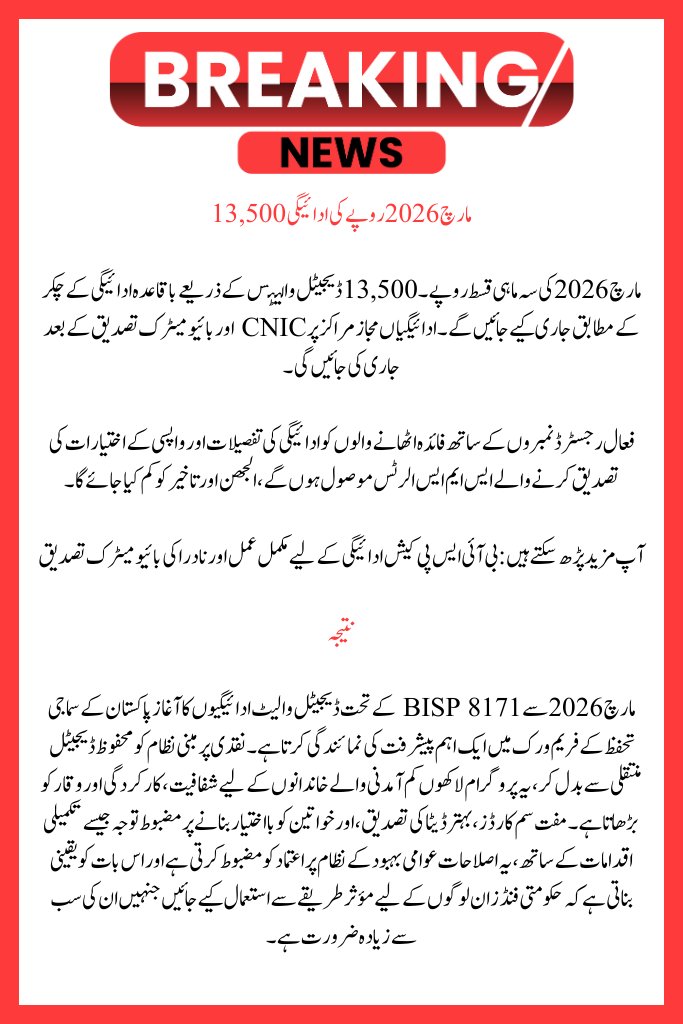
March 2026 Payment of Rs. 13,500
The March 2026 quarterly instalment of Rs. 13,500 will be released through digital wallets as per the regular payment cycle. Payments will be issued after CNIC and biometric verification at authorised centres.
Beneficiaries with active registered numbers will receive SMS alerts confirming payment details and withdrawal options, reducing confusion and delays.
You can read more: BISP 8171 Payment Centres and ATM Withdrawal Regulation 2026
Conclusion
The introduction of digital wallet payments under BISP 8171 from March 2026 represents a major advancement in Pakistan’s social protection framework. By replacing cash-based systems with secure digital transfers, the programme enhances transparency, efficiency, and dignity for millions of low-income families. With complementary initiatives such as free SIM cards, improved data verification, and a strong focus on women’s empowerment, this reform strengthens trust in public welfare systems and ensures that government funds are used effectively for those who need them most.
FAQs
1. When will payments via the BISP 8171 digital wallet begin?
Beginning in March 2026, digital wallet payments under BISP 8171 will be accepted countrywide.
2. Who is eligible to accept payments via the BISP digital wallet?
Payments are available to qualified women who are registered with NSER, have a valid CNIC, and have a low poverty score.
3. How many recipients take money out of the digital wallet?
After biometric and CNIC authentication, money can be taken out of ATMs or authorised agents.